
Chip Build
Chip builds you production tools, agents & apps from a prompt.
Agents, dashboards & automations built in your workspace from a prompt, tested before they run & switched on by you.
Prompt to production solution.
Here is the request a support lead typed, word for word:
I need to keep track of the support runbooks we're reviewing this quarter. Each runbook has an owner and moves through not started, in review, needs changes, then published. Put this in a new space of its own rather than an existing team's area. Seed it with about a dozen realistic example runbooks spread across the stages so I can see what it looks like before we load the real ones.
Minutes after the plan was confirmed, built autonomously: a new space with its table, a board across your stages, realistic sample data & the plan Chip wrote on the way.
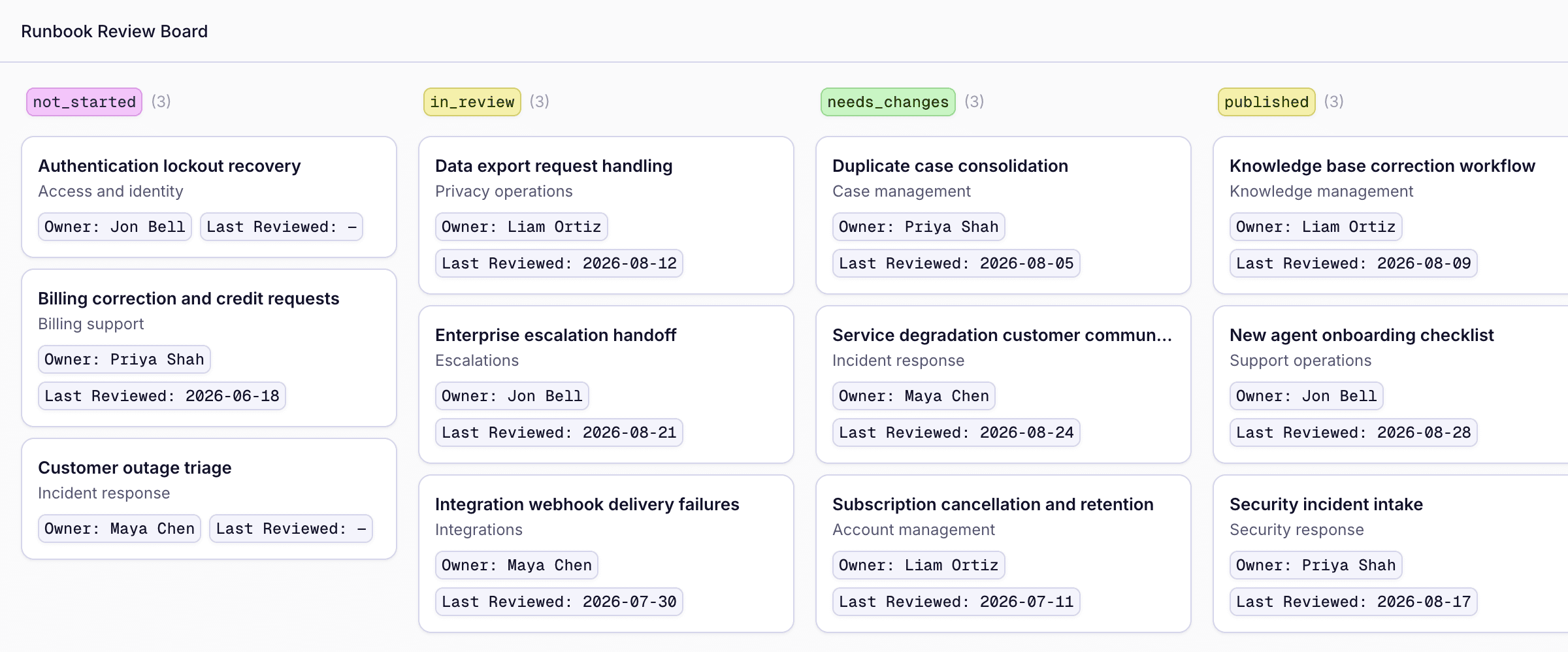
What Chip builds
One prompt becomes a working app in your navigation: the tables, the screens, the automations & the documentation, in one place & ready for your team.
Real tables. Typed Postgres tables with required fields, dropdowns & relationships between them.
The right screen for the question. A worklist for what needs attention today, a board where dragging a card is the status update, a calendar, a dashboard for how you are doing & an explorer for when the question keeps moving.
Dashboards Chip composes itself. Tiles, charts & drill-in tables on one filter bar, with relative dates like last 7 days.
Automations you can read. A graph of named steps, stored as one document you can copy, diff & version.
Documentation written as it builds. Your intent in your own words, an overview of every piece & a decision record for each judgement call.
You stay in control.
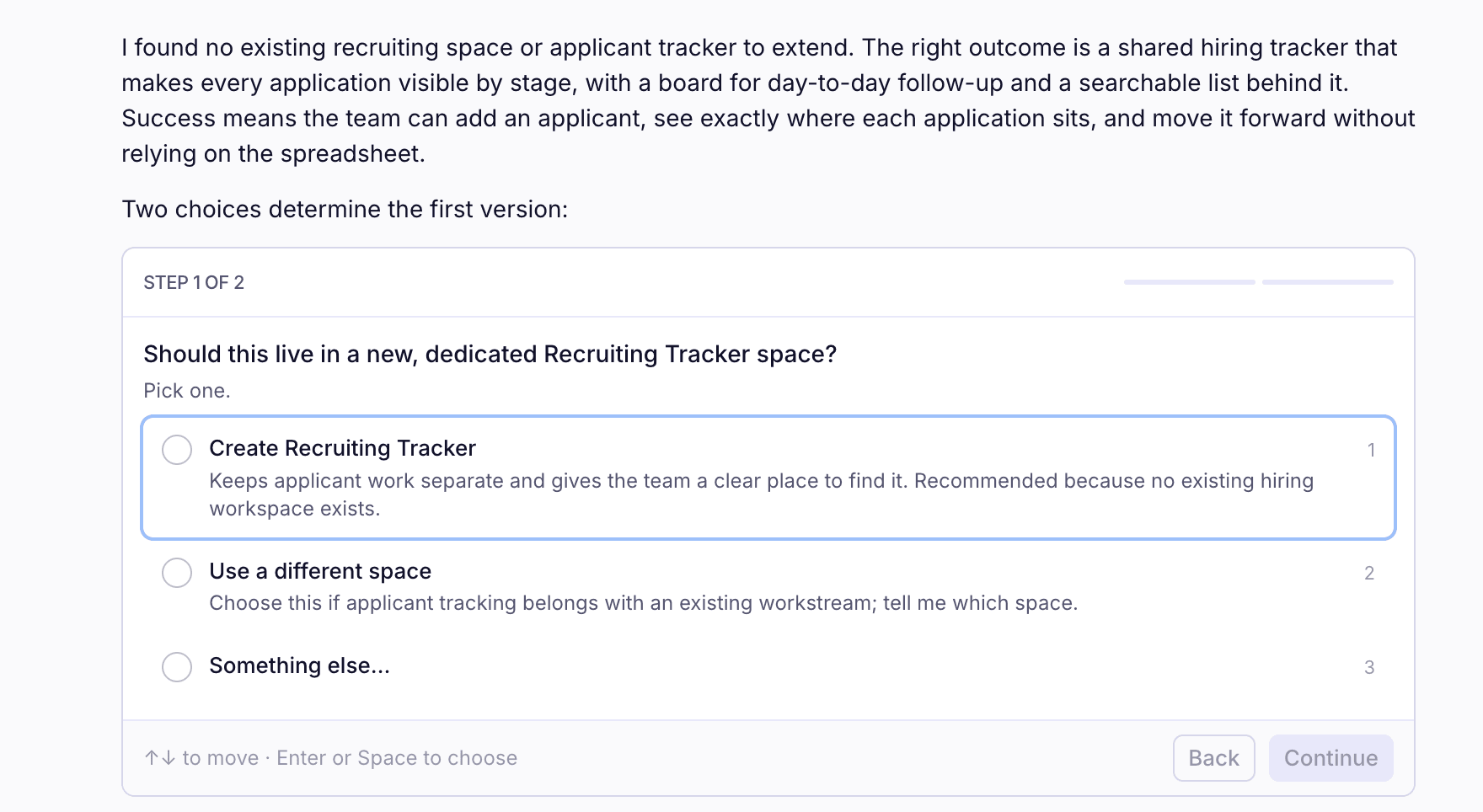
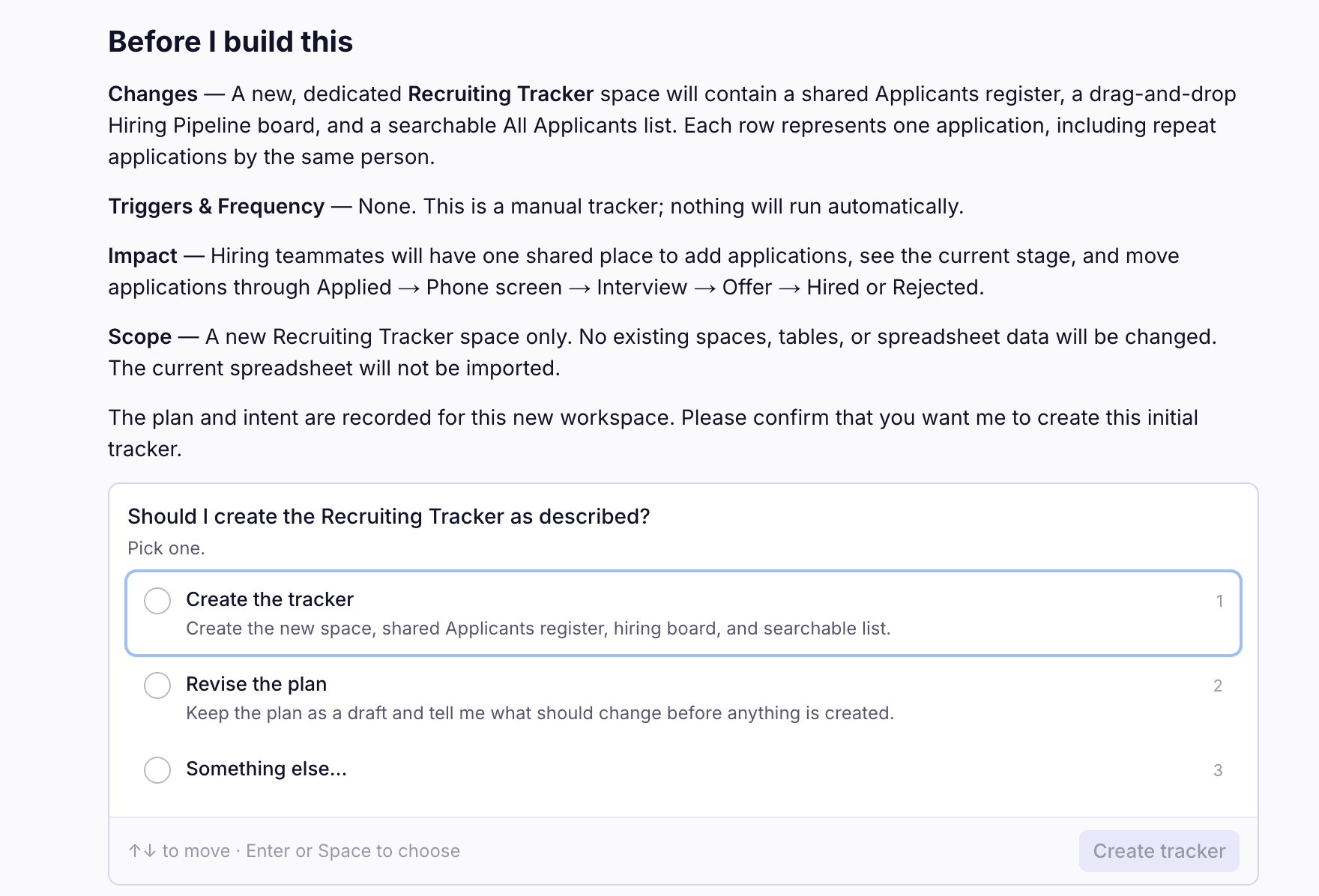
Every build starts with a plan you approve. Chip spells out what it will create & what it will touch, then waits. When a request leaves something open it asks one question at a time, with its recommended answer marked. Nothing exists until you say yes.
Draft first. Every automation Chip creates starts as a draft & fires for the first time on the schedule you choose.
Rehearsed on your real data. Chip dry-runs an automation with sending switched off & reads the output of every step before it hands you the switch.
Staged changes. Editing a live automation saves a new version that stays dark until you promote it. Any earlier version can be restored.
Bring what you already have.
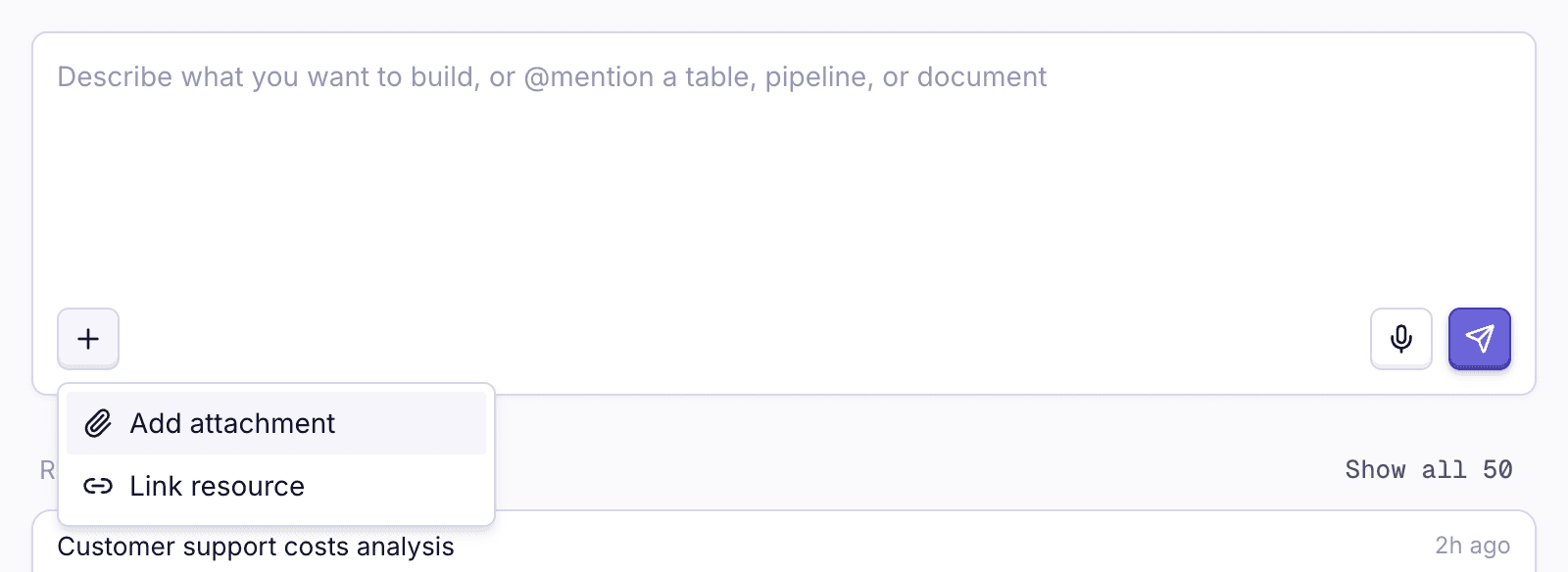
Chip builds from the source material you already have: spreadsheets, exports, PDFs & documents. Attach one & Chip reads it, works out what each column or field means & shows you what it found before anything is written.
Data arrives typed: dates are dates, amounts are amounts & fields with a fixed set of values become dropdowns. Bring the same file again & the table you have updates. Anything Chip cannot read stays visible, so nothing is lost.
Watch it work. Then ask it a question.
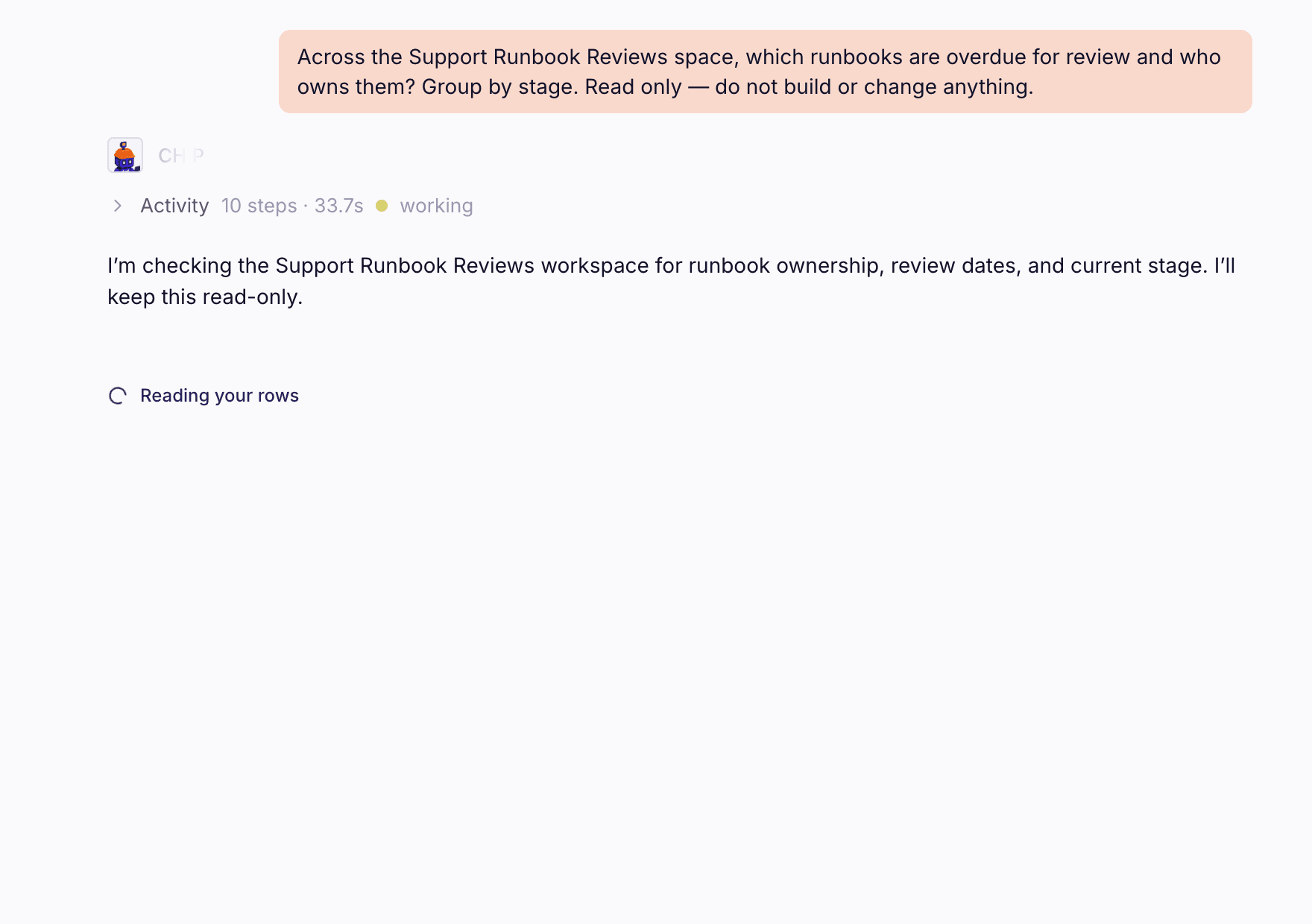
A build in progress. Chip builds in the open. You see each step as it lands, & you can stay or walk away while it works.
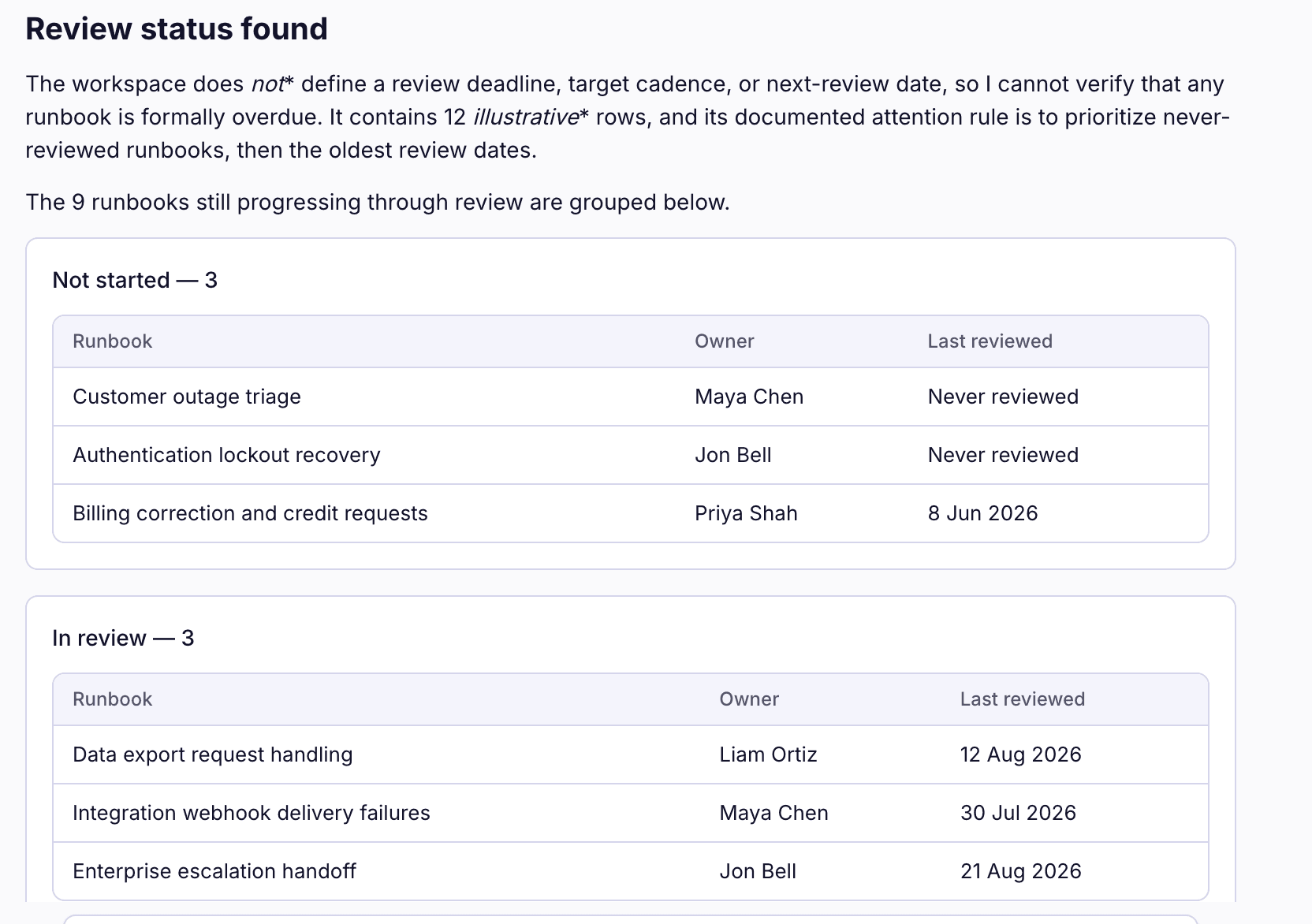
An answer. "Which runbooks are overdue for review and who owns them?" came back grouped by stage, with owners & dates. Where the data could not answer, Chip said so.
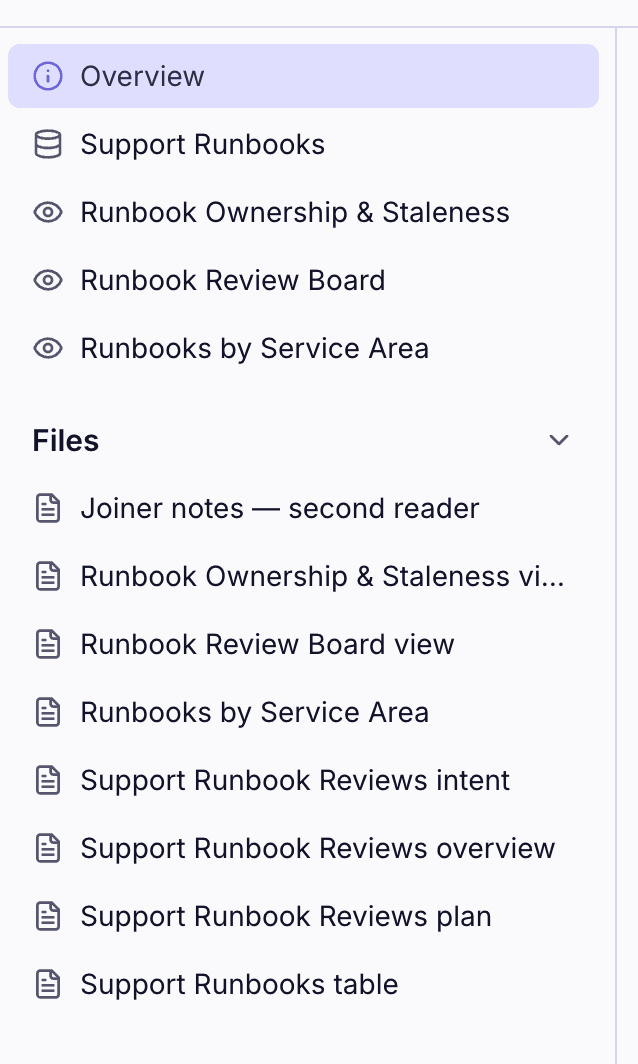
The space. The table, the screens over it & the documents Chip wrote as it went, so the next person in can read why things are the way they are.
What teams build with it
Real requests & what got built from each one.
Contract renewal alerts.
"We keep missing renewal dates and finding out from the client, which is embarrassing."
A daily job that emails the account owner a month out & again a week out, without nagging anyone twice.
See the exampleA morning summary for every team lead.
"It's the same thing five times before coffee."
One job, one Slack post per team & a dated snapshot you can query.
See the exampleInstantly modify existing views.
"It's hard to find what I need. Could you simplify it?"
Chip read the dashboard first & came back with a proposal: fewer tiles, page filters, the same data on one screen, rebuilt in place so every bookmark still worked.
See the example
Questions we get
Bring a real one.
The messier the better. The interesting part is what Chip decides & what it asks.